Sunday, 10 April 2011

Climbing and Outdoor News

Northwest:

--Friends are remembering a Calgary man who died in a weekend avalanche in British Columbia as an avid backcountry skier, accomplished climber and safety-conscious adventurer. Manfred Rockel was killed on Sunday in Kokanee Glacier Provincial Park near Nelson while on a backcountry ski vacation with fourteen friends.
--Lyle Knight and Marc Piche made the first ascent of a new WI 6 in the Okanangan Valley of British Columbia.  They have named their new 400-foot line, Mythologic. 
--First it was milk, then eggs and then bread that began to disappear from the shelves of The Siding General Store, the sole grocery store in B.C.'s picturesque mountain community of Field. Then, five days after the avalanche danger shut down the only highway leading into and out of the town of three-hundred people, the liquor was disappearing.  Finally on Tuesday afternoon, part of the Trans-Canada Highway reopened after the extended closure.

Sierra:

--Fifty-million years ago, powerful forces deep underground launched a new wave of mountain building that swept southward from British Columbia through Nevada and California, and on into Mexico. It was the beginning of what would become today's High Sierra.
--A series of large storms hit the Pacific coast throughout December and into January, causing power outages, road closures and massive snow accumulation in the Sierras. Some Eastern Sierra residents saw as many as three days without power, while flights to and from Mammoth Yosemite Airport were canceled for more than five-days at a time. While good news for “snowed-in” vacationing skiers, record accumulations kept backcountry skiers inbounds as the snow settled.

Desert Southwest:

--The Bureau of Land Management is accepting comments on its proposal to offer special recreation permits for groups within Red Rock Canyon National Conservation Area in Cottonwood Valley and along the 13-Mile Scenic Drive. Under the proposal, permits would be required for weddings, running and mountain bike races, charity fundraising events and other large group gatherings.

Rocky Harvey's Plane after Crashing in Joshua Tree National Park

--The morning sky above Joshua Tree National Park was bright blue and dotted with a few clouds as Rocky Harvey eased his van out of the driveway. He headed to Roy Williams Airport for an 8am flight with his instructor, Warner Henry. They would fly to Palm Springs, and Rocky would land his plane at an airport with a tower for the first time on his own.
Alaska:

--Solo winter Denali Climber Lonnie Dupre is getting there. On the 18th, he was at 14,200-feet and had made a carry to 15,200 feet, which in the regular season is the bottom of the fixed lines. As of this writing his plan was to be at 17,200-feet by the time you read this.

Mount Foraker from 17,200 feet
Photo by Jason Martin

-
Notes from All Over:


--The parents of a Boy Scout who died last year during a 20-mile hike in extreme heat are suing the organization whose famed motto, "Be Prepared," sets a standard they believe the hike's leaders failed to meet. Michael Sclawy-Adelman was 17 and close to reaching scouting's highest rank -- Eagle -- when he collapsed and died during the hike in the Florida Everglades in May 2009

--More than one-hundred people gathered at a bonfire and candlelight vigil Monday night to mourn and honor 16-year-old Joshua Waldron, who died Saturday from injuries he sustained in a skiing accident at Maine's Sugarloaf Mountain Ski Resort. 
--A nineteen year-old woman was rescued Tuesday after she got lost at the Eldora Mountain Resort. The Boulder County Sheriff's Office said Gree R Garcia, was skiing at Eldora with her boyfriend and her boyfriend's brother. At 3:30pm, the group split up so the men could get in one more run. Garcia said she planned to continue downhill to the parking lot, but inadvertently traveled southward, and went out of the ski area boundaries. 

--Last weekend, an amazing new variation was added to the ephemeral Gorillas in the Mist, a 500-foot thin-ice testpiece at Poke-O-Moonshine in the Adirondacks. Three top Northeastern climbers completed a the line that they called Endangered Species (3 pitches, M6+ NEI5+ R).
--The New York Times ran an incredible article this week about planes melting out of the glaciers in Bolivia and in the rest of the Andes.  Apparently, the glaciers melting from climate change are revealing many secrets, including long lost planes and pilots.
--Rocktown Climbing Gym in Oklahoma City has made use of their local cold.  They have farmed ice on the front of their building. 

--Several bottles of key expedition equipment are making their way back home to Scotland more than one hundred years after being abandoned in Antarctica by Sir Ernest Shackleton.  The British explorer's unsuccessful South Pole expedition of 1907 left quite a few bottles of alcohol buried beneath a hut in Antarctica. The stash was discovered last year. 


Manufacturer Recalls and Equipment Issues:

--Backcountry Access (BCA), the North American manufacturer of avalanche safety equipment, has just announced a recall of its latest beacon, the Tracker2. BCA representatives say they have isolated certain issues that could cause a potential malfunction in the T2 units.
--The United States Consumer Products Safety Commission announced a voluntary recall of 3,500 Avalung backpacks due to a suffocation hazard.  The backpacks, imported from China by Black Diamond Equipment, include air intake tubing that can crack at cold temperatures. 
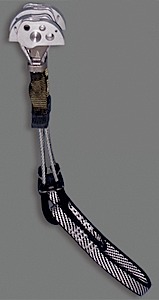

--Totem Cams sold prior to December 31st 2010 are being recalled.  The color anodizing of the cams gives them a surface hardness that may affect their holding power in certain areas of polished limestone and when the cams still retain their layer of anodizing on the area in contact with the rock.

Colleagues are a climbing

Finally, after two years I have managed to get some of my co-workers to come climbing with me. Katie Mabie and Teresa Yan each want to go and check out the new climbing wall in Everett (Metro Rock Gym). This new gym blows away the other gyms in the area and it is creating interest in the climbing community. I love bringing beginners to the gym for the first time, it is always exciting to watc.


Monday, 4 April 2011

Fear of Falling - Clip-Drop Technique

The scariest thing in all of climbing is falling. And perhaps the hardest thing to do in all of climbing is to manage the fear of falling. The Clip-Drop technique is a way to train your brain to accept that falling is a part of the game and that in many cases, that falling is perfectly safe.

In a nut-shell, the Clip-Drop technique is simply what it says. You clip a bolt, climb up a bit and fall. You clip the next bolt, climb up a bit and fall again. The idea is that if you do this all the way up a route, you will become accustomed to falling and will be able to get past the fear of it.

The following video from Steep Media and UKclimbing.com illustrates the use of this technique in a climbing gym.

Fear of Falling - clip-drop technique from SteepMedia on Vimeo.


--Jason D. Martin

Sunday, 3 April 2011

The Culture of Youth and High Stakes Risk

Late May and June were interesting months in the outdoor world. Most of the high end climbing was taking place in the Alaska Range and in the Himalaya. Japan's Giri-Giri Boys completed a new route in the Ruth Gorge. Ubber-climber Colin Haily completed an ascent of the Cassin Ridge in seventeen hours. And a Kazakh climber added a new line to Mount Everest's closest neighbor, Lhotse.

But while all of this high-end end, high-stakes alpinism was taking place, something else was going on, something much quieter. Two teenagers were engaging in risky endeavors where the stakes were just as real as the stakes being sought by world class alpinists.

In one venue, thirteen year-old Jordon Romero became the youngest person ever to summit Mount Everest. And in the high seas 2000 nautical miles off the Western Australian coast, sixteen year-old Abby Sunderland was foiled in her attempt to make a solo sailing tour around the globe.

Jordon climbed Everest via the more technical north side and opted to go without a professional Western guide. There has been quite a bit of controversy about whether or not someone so young should be allowed to climb at such altitudes. It's not terribly clear what altitude does to teenagers. It tends to affect young adults more radically than older adults, so it might be possible that there could be serious cognitive effects from extreme altitude on a still developing brain. There are a lot of questions about whether or not he truly understood the magnitude and the potential risk involved in such an ascent.

After Jordon summitted, a Sherpa guide announced that he would take his nine year-old son to the summit. Nepali authorities do not allow climbers under the age of sixteen, so he too would have to climb from Tibet. Shortly after this announcement, the Chinese closed the north side to anyone under the age of eighteen. As a result, Jordon will remain the youngest person ever to climb Mount Everest.

Jordon is only one mountain away from completing an ascent of all seven summits. He plans on climbing Antarctica's Mount Vinson sometime late this year.

Sixteen-Year Old Abby Sunderland

After five months at sea alone, Abby Sunderland was rescued by the Australian authorities. She encountered thirty-foot swells and her boat was severely damaged. The teen lost her ability to communicate with the outside world and many feared the worst. A fishing vessel rescued her from the remnants of her damaged boat.

One might argue that this is a bit more dangerous than Mount Everest. On the mountain, you have your team to fall back on. On a solo voyage around the globe, you only have yourself. If something goes wrong and you can't fix it, then it's all done.

Some reports indicate that Abby's father signed a deal with reality TV producers shortly after the teenager set sail. It wasn't terribly clear what the show was going to be about, but it was likely going to feature all seven of Laurence Sunderland's "daredevil" children and was to be entitled "Adventure's in Sunderland."

The current rumor is that the television show is dead, but it sounds like all is not lost in media land. Indeed, some articles indicate that book deals, documentaries and other reality television projects are all a possibility for the family. Abby's father denies all of these rumors.

Abby is not the only teenage woman to attempt a solo circumnavigation of the globe in a sailboat, Australian Jessica Watson finished just such a journey on May 16th.

The Christian Science Monitor notes that:

A Dutch judge stopped a 13-year-old girl from trying to sail around the world last year. The Dutch Child Protection Agency had asked that the girl be placed under state custody, calling her plan to spend about two years circumnavigating the world aboard a 26-foot boat "irresponsible."


So is it responsible to send your child on an adventure such as this? At what point do you have to say, maybe when you're a bit older? Is it fair to tell your child to dream big and then to lock him or her in the closet?

Both families have been severely criticized...and perhaps they deserved it. Both teens are likely better for their experiences...and perhaps they earned it.

There are no easy answers here. I have two small children and I could easily see them climbing Mount Baker at fourteen years-old, but not Mount Everest. I don't know much about sailing, so it's hard for me to be comfortable saying that I could see them sail alone across a smaller body of water than an ocean, but maybe I would. It depends on who they are when they are that age...and perhaps more importantly, who I am when they're at that age...

--Jason D. Martin

Saturday, 2 April 2011

Rappelling on Skinny Ropes

Super skinny ropes are becoming more and more common among high-end alpinists. Twin rope systems provide a climber with the ability to do double-rope rappels with just a bit more weight than a single line. They provide additional security should one of the lines get cut or damaged during a lead. And lastly, they are a bit slick when it comes to rappelling.

It's this last item -- providing more friction on the rappel -- that we will address in this blog today.

As with most of the things that we address here, there are many ways to add friction to a standard device. The first and most popular way is to simply add a second carabiner to the rappel. This decreases the size of the holes in your belay device and increases friction because there is more ground for the rope to run over.

The second way, while less popular, works just as well. In this system, the rope runs in a Z, running down from an extended device to the climbers leg-loop, being redirected back up above the device to a carabiner and then down to the break-hand.

The preceding picture is slightly difficult to see as there is shade on the climber; but you will note that the climber is holding the rope with her left-hand. The rope runs down from above and into the device. From the device it runs through her hand. There is a autoblocking hitch clipped to her belay-loop in her hand. From the autoblock, the rope runs to the leg-loop, is redirected off a carabiner and runs back up to the top. At the top, it is redirected off of another carabiner and the backside goes to the breakhand.

Some of you will probably end up pointing out that the woman in the picture is about to rappel off the end of the rope. Rest-assured, she was on the ground when this picture was taken and was just setting up the system to practice.

In the preceding picture, it is possible to see how the autoblock is engaged and how the rope is redirected back up.

After the rope is redirected off the leg-loop it is then again redirected off of a carabiner clipped to the line coming out of the top of the device.

This is a somewhat complex system to demonstrate here, but if you put it together, it will make sense once you see the ropes moving through the system...

Adding friction to a rappel is an important skill to have. Whether you use this system or add an additional carabiner, it might be a good idea to practice before you actually need additional friction. This will decrease the liklihood of a mistake when doing it for real...

--Jason D. Martin

Tuesday, 29 March 2011

The Philosophy Of Verve

The first six pairs of Verve shorts I owned were actually men’s and probably a size or two bigger than they needed to be. I was an 11-year-old tomboy, climbing in a gym where female climbing partners where considered an endangered species. I idolized the guys I climbed with, so, I wore what they wore.
A few years later, after some persuasion, I finally moved on to the women’s clothing and tried a pair of Saphos. I liked them. A lot. They tastefully fall just below the knee, safely covering up all the valuables. They’re loose, but drape perfectly over the butt and made me feel comfortable but not frumpy.


Since then, I’ve grown up and my shorts have gotten smaller. Although I now have no insecurities about wearing skimpy Magico shorts and Lorelli bras, I still have Verve clothes from 10 years ago that I like to wear now and then, simply because they are still comfortable. Even though my taste in clothing has changed quite a bit, Verve clothes continue to look and fit just right on me; being in climbing clothes is where I feel most like myself. I have a confidence and a comfort when I’m wearing them that I just can’t quite find when I’m wearing street clothes. In Verve, I don’t have to worry about whether my pants are falling down, if my bra is showing, or if my skirt is twisted; I feel natural, ready to sprawl out, or go climbing, or running, or dancing. My poor Verve clothes get stuffed into yoga bags, climbing bags, beach bags and suitcases. They go up mountains, down rivers, across oceans and August through May, they even attend school. My poor Verve clothes really go through it all. But as I grow up, as my hobbies vary, as I explore the world and figure out who I really want to be, I may change a lot, but favorite Verve pieces will always be in tow for the journey.

Friday, 4 March 2011

Going International

Looks like summertime is finally going to be with us for awhile. With nothing but sunny days in the forecast, now is the time to come out and crush the mountain! Conditions on the upper mountain are as good as they get for early July. Routes such as Liberty Ridge and the Fuhrer Finger that normally get a little thin this time of year are still holding lots of snow and should really be climbed a lot in the coming weeks.

Climbing rangers have been fairly busy over the past weeks with a number of tasks including climbing the mountain, training with the military, doing a couple of searches and rescues, and in our spare time trying to keep the toilets clean. One of the most special things that has happened in our world lately is that we have been able to host Ang Tshering Lama, a Nepalese climber, who was here as a guest ranger for three weeks in June. Ang spent time at both Camp Muir and Camp Schurman, patrolling climbing routes with rangers, taking part in our various trainings, and assisting in multiple rescues. If you were at Camp Muir or Schurman in the past few weeks you might have even caught a smell of the delicious food he cooked up for us during his stay. This is the third year in a row we have hosted Nepalese climbers in our program and we are very proud of our close relationship with their climbing community. Later this summer we will be hosting the Korean Alpine Rescue Team, so stay tuned...

Be sure to come by the Guide House up at Paradise, or one of the other ranger stations around the park, and say "hello."